From time to time the BNS will make available recordings from the monthly and other meetings. Click the link to view the presentation. The video recording should successfully play on any computer that has a suitable video player installed e.g. VLC, which can be freely obtained here: https://www.videolan.
PLEASE NOTE THAT SOME VIDEOS WILL TAKE A FEW MINUTES TO DOWNLOAD BEFORE THEY CAN BE PLAYED... IF THIS PROVES PROBLEMATIC THEN SIMPLY DOWNLOAD THE VIDEO FILE TO YOUR PC AND PLAY IT FROM THERE. ANY PRESENTATIONS IN ITALICS ARE TEMPORARILY UNAVAILABLE.
| Article #211 |
|
||
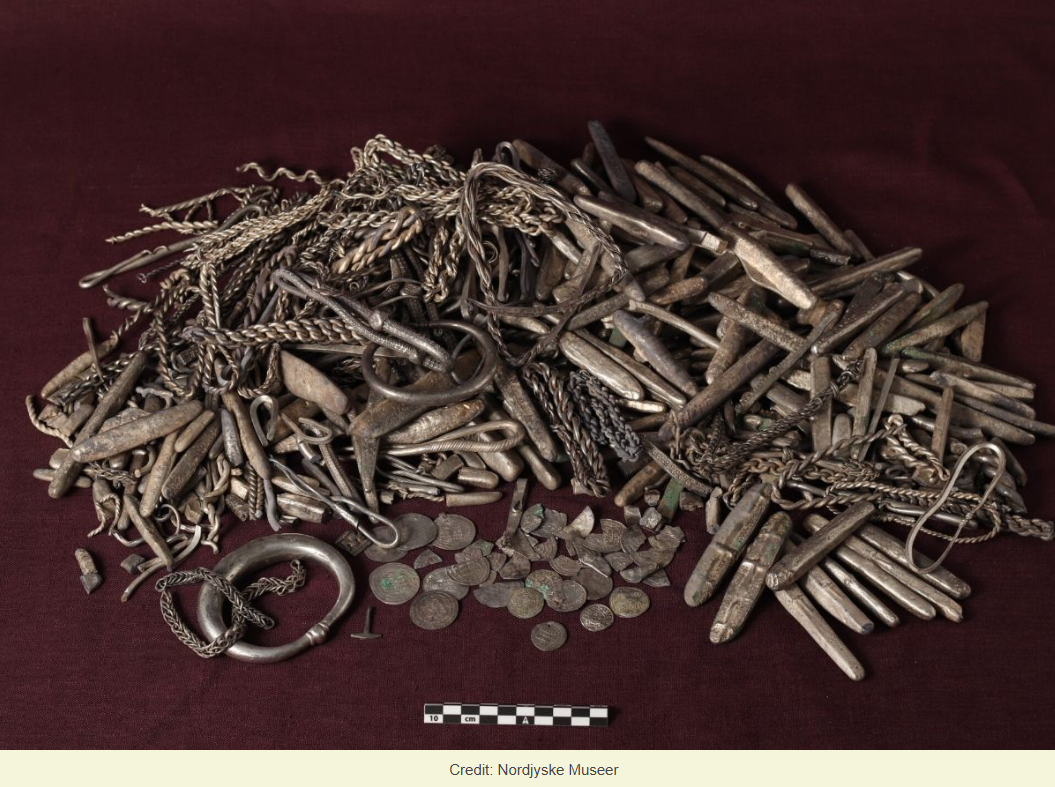 |
28th Sept. 2026 - Prof. Jens Christian Moesgaard. The massive influx into Scandinavia and the Baltic area of English pennies from the late 10th to the mid-11th century is well-known and has already been subject to intensive research interest. During the first half of the Viking age, up to the mid-10th century, Islamic dirhams from the Middle East and Central Asia completely dominate the coin import to Northern and Eastern Europe. However, a few English and Continental coins also found their way to these regions. The paper presents this material and provides some thoughts about its significance. | ||
|
|
22nd June 2026. Dr Kevin Clancy, Director of the Royal Mint Museum in Llantrisant, "The Tower Hill Community". | ||
|
|
Dr Gary Oddie, Bermuda’s hog money: a simple story buried in heaps of speculation. (A talk pre-recorded prior to Gary's death in February 2025). | ||
 |
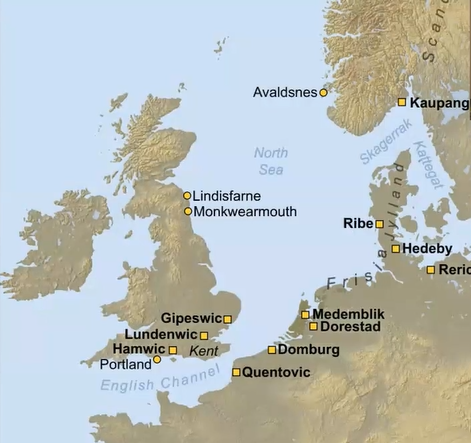
23rd November 2025 - Dr Elina Screen, Presidential address: "Britain and the sea in the first millennium, 4: Commerce and contacts with the Baltic."
|
||
 |
Videos of some of the talks are now available ....
Lucy Moore, ‘Throwing the Numismatist on their own Resources’: Hugh Pagan's Impact on the Study of Northumbrian Coinage.
Richard Ambrose, The coinages of Harold I and Harthacnut in Light of Recent Discoveries
Alex Bliss, A Pasty and Some Pennies: the 11th-Century ‘Sizewell C’ Hoard
Andrew Burnett and William Poole, The Coin Collection of the Oxford Anatomy School
Elina Screen, Hugh Pagan and the BNS.
|
||
|
|
24th March 2025 - Dr Jane Kershaw, Silver and the Origins of the Viking Age: implications for coinage from the east and west. In this talk, I will reflect on a recently-completed 5-year ERC-funded project examining the origin of silver in the Viking Age. Through large-scale lead isotope and trace element analyses, the project tracked flows of silver entering Scandinavia from the Islamic east, as well as western Europe, identifying regional patterns and establishing a new chronology for the arrival in the north of Islamic silver. I will ask what the implications are for contemporary coinage in particular, both within Scandinavia and in overseas territories the Scandinavians settled. I will link the production of Islamic dirhams to particular mining regions, and argue that dirhams arrived in Scandinavia in significant volumes in the ninth century. Turning to the west, I will examine the sources of silver making up Carolingian and Anglo-Saxon coinage in the ninth century, and demonstrate how and where these coinages were melted down and cast into objects. Tracing patterns in the geochemical data sometimes reveals networks and wealth sources not otherwise recorded. Dr Jane Kershaw is the Gad Rausing Associate Professor in Archaeology at the University of Oxford. She researches different aspects of the Viking-Age economy, with a focus on metalwork, silver and other forms of currency. |
||
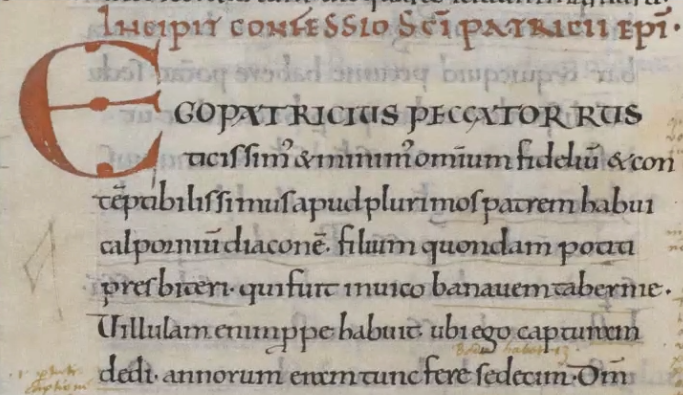 |
25th November 2024 - Dr Elina Screen, Presidential address: "Britain and the sea in the first millennium, 3: currency, contacts and conflict in the Irish Sea." From ancient times Britain and Ireland have been very aware of their island character, but the seas around the British Isles have always connected as much as divided. Peoples, objects and ideas – including coins and the concept of coinage – have all travelled to and fro. Indeed, coin finds offer important evidence for these movements and contacts. This series of lectures will explore the contacts and influences on coin use in Britain in the first millennium, taking an approach inspired by global history, which sees the sea as a space of connectivity. This lecture turns to the Irish Sea, and focuses on encounters and exchanges in the Viking Age, when the sea routes that criss-cross the Irish Sea brought both opportunities and risks to Britain and Ireland. Developments in the coinage and use of silver reflect these encounters and the emergence of new concepts of value. |
||
|
|
|||
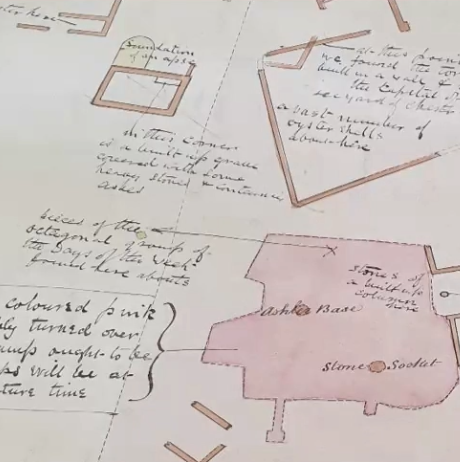 |
The Howard Linecar Memorial Lecture - Professor Sarah Scott: The archaeology of curiosity and collaboration. Investigating everyday life under Roman rule in the East Midlands. This lecture will explore the discovery and interpretation of small finds in the East Midlands. It will focus on the motivations and contributions of those involved in piecing together stories of everyday life under Roman rule, examining the ways in which curiosity, creativity and collaboration have underpinned pioneering archaeological endeavours. Through wide ranging examples, past and present, it will assert that many of those involved were ‘ordinary’ people attempting to make sense of the world around them, valuing a tangible connection with the past, enjoying the process of investigation and the collaborative nature of these endeavours. It will argue that such contributions merit greater recognition, and that kindness and collaboration are critical to a vibrant and inclusive future for the discipline. | ||
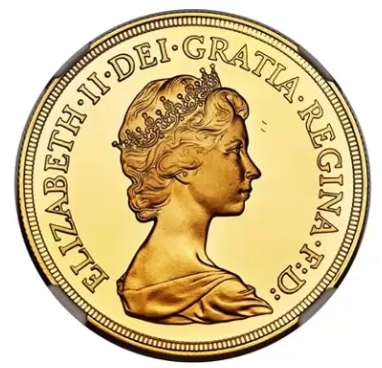 |
23 September 2024 - Dr. Mark Stocker: ‘Reams of useless designs’? The 1966 public competition – together with the less publicised invited competition – to select the UK decimal reverse designs was a significant if brief episode in the progress towards a satisfactory circulating coinage. It had a direct bearing on the continued functioning and well-being of the Royal Mint Advisory Committee (RMAC). Momentarily, controversy over what form it would take and who decided the winners even threatened to postpone the issue of coins and ‘D-day’ alike. This paper will set the slightly chaotic scene of the competition, exploring where possible, entries that failed to make it to his book, When Britain Went Decimal: The Coinage of 1971 (2021). | ||
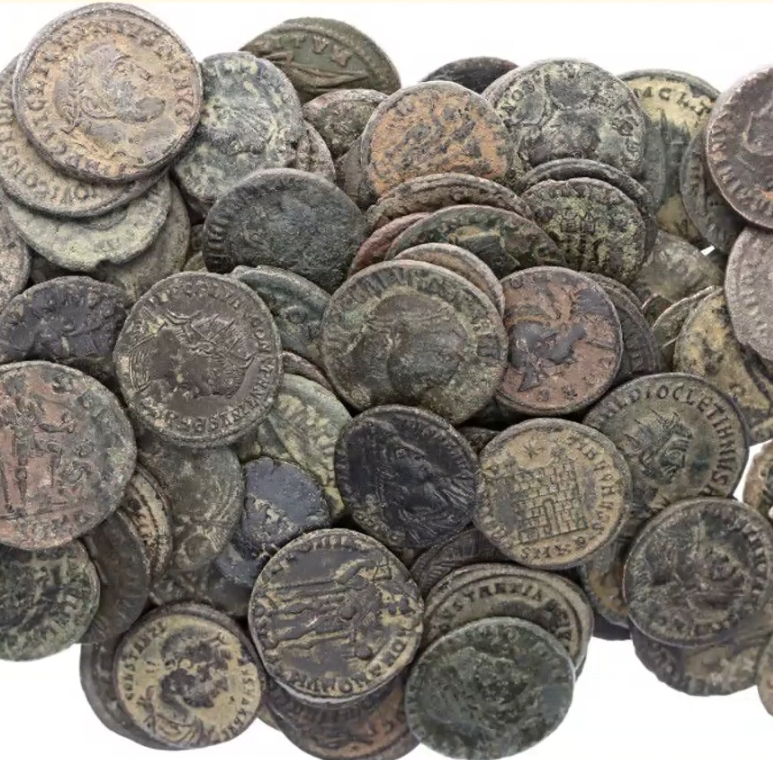 |
22 April 2024 - Richard Henry: Roman coinage in 4th century Britain. A recent corpus of almost 500,000 coins (site finds) from England and Wales allows us to explore the changing pattern of coin loss during the Roman period. This paper will consider the 275,000 Roman coins from the 4th century alongside a re-evaluation of material culture linked with the military and the state-run bureaucracy to evaluate the regions of most interest to the late Roman state. Examining the later material on its own, rather than coin profiles across the whole Roman period, enables distortions from the earlier history of sites to be suppressed. By focussing solely on the patterns seen in the 4th-5th century we can test the narrative of declining coin loss at military sites against others within the settlement hierarchy and explore some of the key trends identified across the Roman diocese of Britannia. | ||
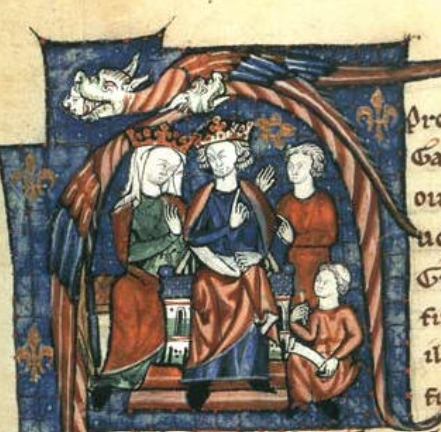 |
25 March 2024 - Eleanor Stinson: The continental coinage of Henry Plantagenet, Duke of Normandy, Duke of Aquitaine, count of Anjou and King of England. Henry Plantagenet ruled large swathes of land in western France from 1150 until his death in 1189. Within these territories hundreds of silver coins circulated freely each carrying the name of a different issuing authority and with varying silver contents and values. When compared to the coinage in the Kingdom of England during Henry’s rule (1154-1189), which consisted of a single uniform royal coinage carrying Henry’s name and bust, the French coinage is generally presented as chaotic and disorganised with no level of centralised control. This lecture will show this was not the case with there being a correlation between the types of coins which circulated in particular regions under Henry Plantagenet’s control, and his authority within that region. The paper will show how looking at the coinage in Henry’s French lands can inform our understanding of his authority within his cross-Channel demesne, and in so doing provide a contrast to his English coinage. | ||
 |
22 January 2024 - Martin Jennings - who designed and modelled the effigy of King Charles III for the new coinage. In this talk he discusses the process of making this, the smallest of his public sculptures, as well as some of the largest, including his statues of John Betjeman at St Pancras Station, George Orwell at the BBC and Mary Seacole at St Thomas's Hospital, comparing and contrasting the demands placed on him by the scale of the finished work.
|
||
|
|
27 November 2023: Dr Elina Screen's Presidential Address, Britain and the sea in the first millennium, 2: Coins and the coasts of the North Sea. |
||
 |
25 September 2023: Dr Shailendra Bhandare, Kutcha Paisa: Investigating a Monetary Phenomenon in 19th Century Colonial India. | ||
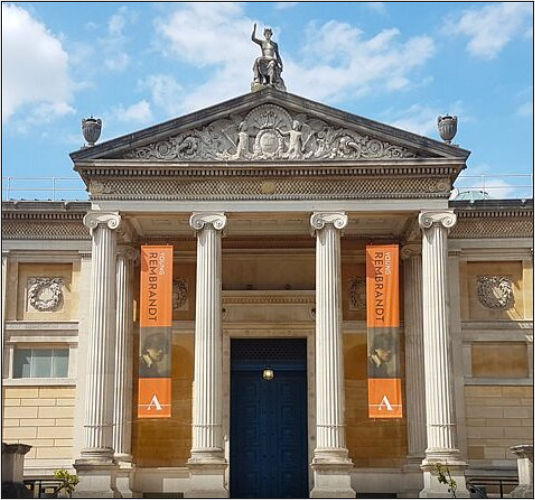 |
July 2023 : BNS Summer Conference at the Ashmolean - Coin Hoards | ||
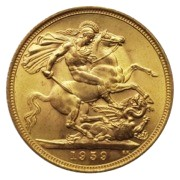 |
June 2023: Chris Barker, The post-War sovereign, Part III: towards a modern bullion business – diversification and expansion. | ||
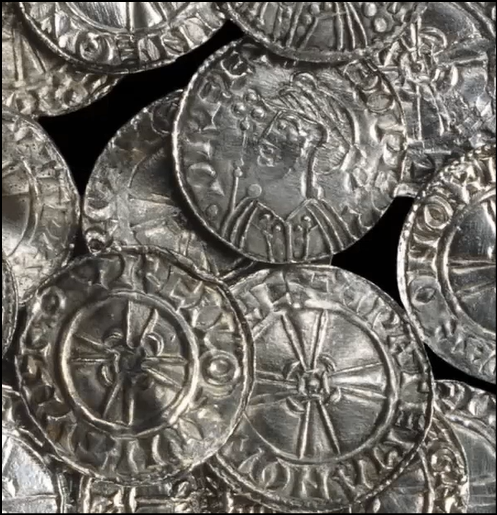 |
March 2023: Rory Naismith, The Moneyers and Doomsday Book | ||
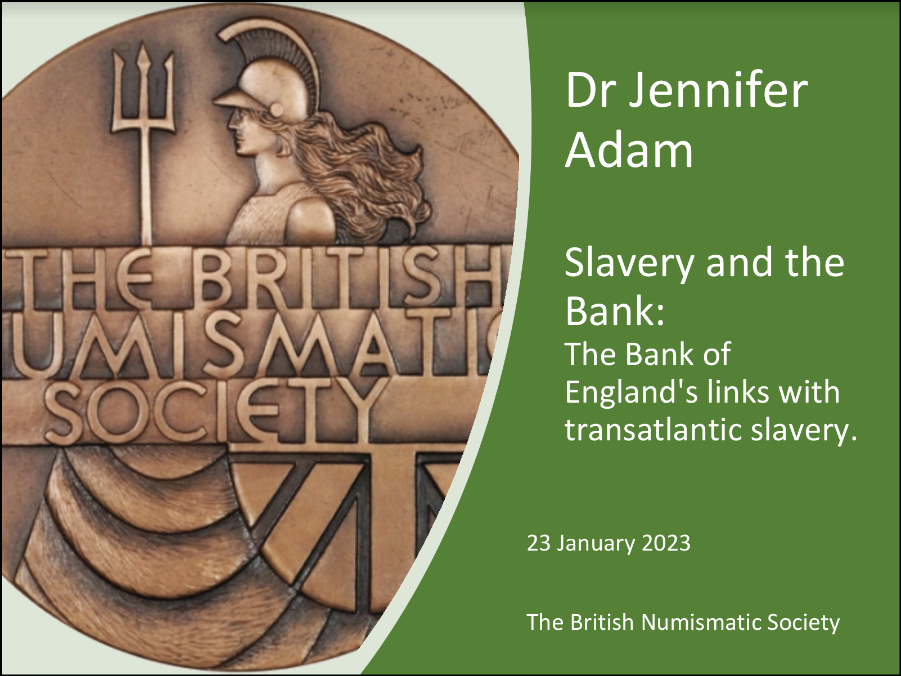 |
January 2023: Jennifer Adams, Slavery & the Bank: the Bank of England's links with transatlantic slavery. |
||
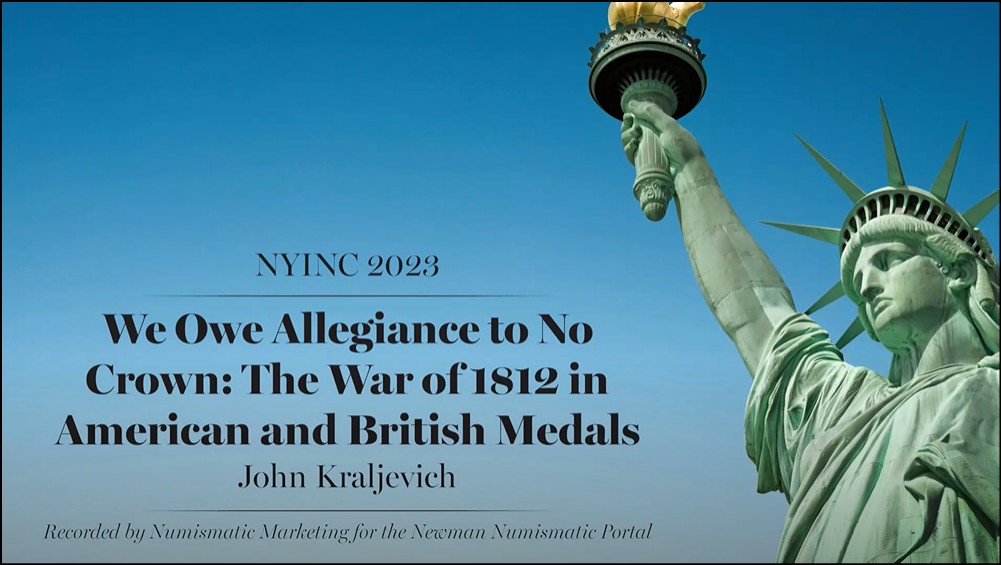 |
John Kraljevich, New York International Numismatic Convention, "We Owe Allegiance to No Crown: The War of 1812 in American and British medals". | ||
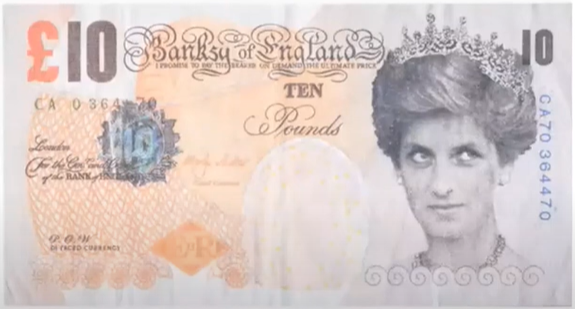 |
Currencies of Conflict and Dissent in Britain; 1800-2020. (Dr Richard Kelleher, Feb.2022) | ||
 |
Coinage, Landscape and society in the borderlands: economy, politics and identity in Scotland and northern England 1136-1603. (Carl Savage, October 2021) | ||
 |
In case of emergency’: the return of sovereign production after the Second World War - Chris Barker | ||
 |
'The last golden age of British Numismatics; Reflections from the Stewartby Archive of English numismatic papers' - Dr WIlliam Day. | ||
 |
'Crisis in the Eastern Channel: the transformation in Iron Age/Celtic coinage wrought by Cæsar' - David Swan | ||
|
|
‘More widely known by his works than any other living artist’: William Wyon RA (1795-1851) - Sir Mark Jones | ||
 |
'Early Modern British and Irish obsidional coinage in its European context' - Tristan Griffin | ||